
Measurements prove that only what passes through the filters in our brain can penetrate our consciousness. Only when synchronously firing nerve cells react to an object in our field of vision does a reality appear …
-

-

We’re all gonna die! What can we do?
Man is no exception! Every living thing ages and will die. Nevertheless, it seems as if people have a special place in nature – because they are aware of their transience. We meet our death …
-

Interview with Heiner Monheim
Heiner Monheim is a geographer, urban planner, traffic expert, professor of applied geography, border crosser between science and practice, utopian and fighter for more liveable cities. Mr Monheim, you have long been committed to …
-

Finding housing and building land – An app is to help communities
Carl is standing in front of a house with smashed windows. While he takes a photo of the building with his tablet, he wonders who this house may have once housed. From the road that …
-

Interview with Gunter Dueck
Gunter Dueck is a lateral thinker who is also called “Wild Duck”, or “Wilddueck”, by some people. He interferes, comments and asks many questions. After studying mathematics and business administration, he worked for five years …
-

Contact exchange – bull’s eye heart. A future for love!
from Marten Steppat Back in the day. In the search for the love of your life you try out many things. Andrea Holthaus registers for this purpose again on this day at the partner exchange. …
-

Digitally stupid – Is digitization making us all shallow thinkers?
Modern man is above all one thing: absent-minded! In a time in which we are mostly digitally overstrained, one elementary question arises: Will our thinking become increasingly flattened by the Internet? How can we stay …
-

Scarce, valuable, economical – our way into the future – The world in a hundred years
by Friedrich Wegenstein My utopia does not have a hundred years, but challenges us here and now. In the spirit of Kant, it challenges us to free ourselves from self-inflicted immaturity and to take responsibility …
-

The world in a hundred years – humanity has a child!
Illustration Susanne Gold, Text by Ralf Gawel There is a huge hype about artificial intelligence – every day we see and read new stories And justifiably so! Because it is certain that AI will completely …
-

A new category in my blog: Vision Company
Building a business requires courage, capital, the willingness to leave the comfort zone of a regulated life and a market that can be developed. What at first sounds banal often turns out to be a …
-

Laufzettel adé: Finally help for German craftsmen?
The little woman with the colourful apron has made up her mind: she wants a green living room. Only then, she says, would her lemon-yellow budgerigars feel really good. Master painter Wildung has to grin, …
-

The fear of super-intelligence. Do machines get smarter than people?
The human brain stores and organizes information according to patterns and is thus the inspiration for artificial intelligence. In our brain, more than 100 billion nerve cells are connected, which store our knowledge in patterns, …
-

Emergency stop 2069 – The world in a hundred years
Ilustration Susanne Gold, Story Sue Doma After mankind had wiped out and destroyed almost everything that was alive and essential for survival by the year 2069, an abrupt change of all nations and countries set in …
-

Megatrend minimalism – what does the hermit crab teach us?
Yadokari is his name, he was born in Japan and likes to live by the water. The hermit crab always carries its house with it, is small, efficient and flexible. This makes him a symbol …
-

We are one we are Love – The world in a hundred years
Illustration Susanne Gold/ Text Melanie Dorn
-

In the glass train of time – the world in a hundred years
Illustration by Sharon Calman /Text by Claudia Conen It is a day in January 2019 – I love life in the here and now There’s a transparent train I get on. I can see everything …
-

Privacy Paradox: Do we want privacy or not?
Online, many of us disclose our data, communicate via social media, use dating portals and payback cards relatively carefree. When travelling on the net, many people seem to be indifferent to the fact that they …
-

Social justice – just a ghost?
The poor get poorer, the rich get richer: A study by the Hans Böckler Foundation showed that the salary gap between top managers and employees in the 30 Dax corporations continues to widen. Comparing the …
-

Working agile – but how?
It was not so long ago that employees did not have to think a lot. They were assigned tasks, which they completed according to priority. This world still exists – parallel to the newly emerging …
-

Do robots write song lyrics?
Robots as journalists He who writes, stays! For a long time, the idea was held that man could retain sovereignty over the word and thus his secure job. Natural language was believed to be a …
-

New Year’s Eve in a hundred years
-

Trade is change?
Whether it’s corner shops, supermarkets, specialty stores, department stores or entire shopping arcades – it seems as if no store will remain untouched by the digital upheavals of our time. In many cases, the process …
-

Silence or deafening night?
Silent Night, Holy Night is the title of the Christmas carol which celebrated its bicentenary this Christmas. More people than ever seem to want silence. At the same time, reality often sounds different: Noise – …
-

Christmas in a hundred years!
by Petra Höberl Today we remember Luise. Who’s Luise? She’s the girl that got rid of Christmas! Why is that? In order to understand this, we will go on a journey through time, to the …
-

Understanding the course of the world with Viagra!
Sometimes you can find solutions to problems that you have not looked for. This is the case with Sildenafil, better known under its brand name Viagra. This drug was originally developed to dilate coronary arteries. …
-

Smart home and digital factory – how does it work?
Smart objects can be packaging, work pieces or even objects in every household. They have a digital memory in the form of a data storage device. This enables the connection of objects – which are …
-

Work 4.0 – but medieval in mind?
Before the invention of the steam engine was the age of the craft guilds. There was hardly a company where more than twenty people worked together. First large companies The exceptions were the companies that …
-

Why do managers not react like Pavlovian dogs?
“The idea of behaviorism is now a good hundred years old: You expose animals and humans to certain stimuli or stimuli and observe how they react to them (“response”). If these stimuli or stimuli are …
-

How to finance the welfare state of tomorrow?
Good morning, Monday! Most of us go to work on this day of the week. That this could change is not new anymore. Experts predict that robot workers will be able to replace humans in …
-

What to do when life gives us grief?
Think positive! That’s a real battle cry of our time. Even in the case of strokes of fate, it is expected that one recognizes the added value of such a one as soon as possible …
-

Rebellion of the rulers or grapes in winter?
For many of us born in the sixties or earlier, it was not common to be able to buy strawberries and grapes at Christmas. In the sixties and seventies of the last century, global supply …
-

When is progress successful?
Per capita income has risen again this year. We do not seem to be happier people because of this. As early as 1974, the US economist Richard Easterlin first pointed out the paradoxical phenomenon that …
-

The city of the future – rural green?
According to the UN, the age of the megacities is approaching: in 2030 there will be 43 cities with more than ten million inhabitants. Cities are the states of tomorrow! Urbanization – a huge challenge …
-

The greed for growth. No price too high?
Theoretically, we have known for a long time that money and objects do not make you happier at a certain point. The US psychologist Abraham Maslow used his pyramid of needs to illustrate that …
-

IOT and DIY: Fix it or throw it away?
The generation of our grandparents still did it: it was once customary to maintain and repair something. Cross your heart – when was the last time you repaired something? Today, defective objects are usually thrown …
-

Trade unions: With new tasks to increase membership?
Are you a member of a workers’ association? Is there an organization that represents your interests? Probably not. In the past, trade unions were much more important than they are today At that time, when …
-
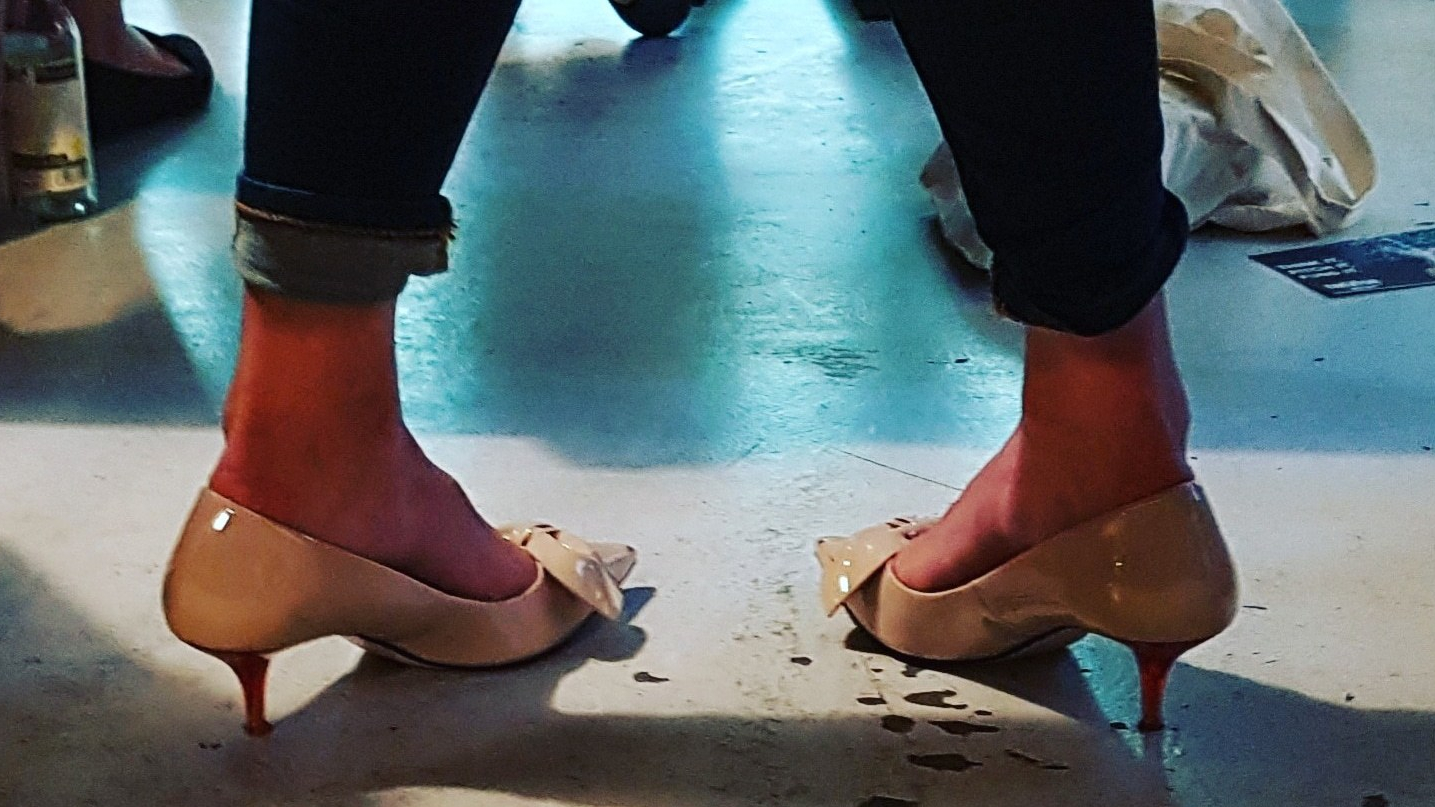
Single! Self-inflicted?
You’re single? And you have often heard that you will only find a partner when you change? Then my utopian question book entry today is exactly your topic! All alone and your fault? The advice …
-

The long waves of innovations
Inventions resemble the waves of the sea One idea triggers another. This is how the Russian socialist and revolutionary Nikolai Kondratjew found out at the beginning of the 20th century. Since he applied this principle …
-

Exploring new paths?
To break new ground and save our earth from destruction, we need new ideas! We need to rethink not only our lifestyle, but also the way we run our economy. Fortunately we have the internet …
-

Our seas – no man’s land and everyman’s land?
Our seas and oceans in particular are at the focus of climate change. They should actually belong to their inhabitants, but are exploited as if they belong to no one. The high seas are in …